
Why Your Success Depends on Your Geography
Success Geography Theory explains why your location determines your business ceiling. Learn how Musk, Einstein, and Nestor Sulu used geographic pivots to scale.
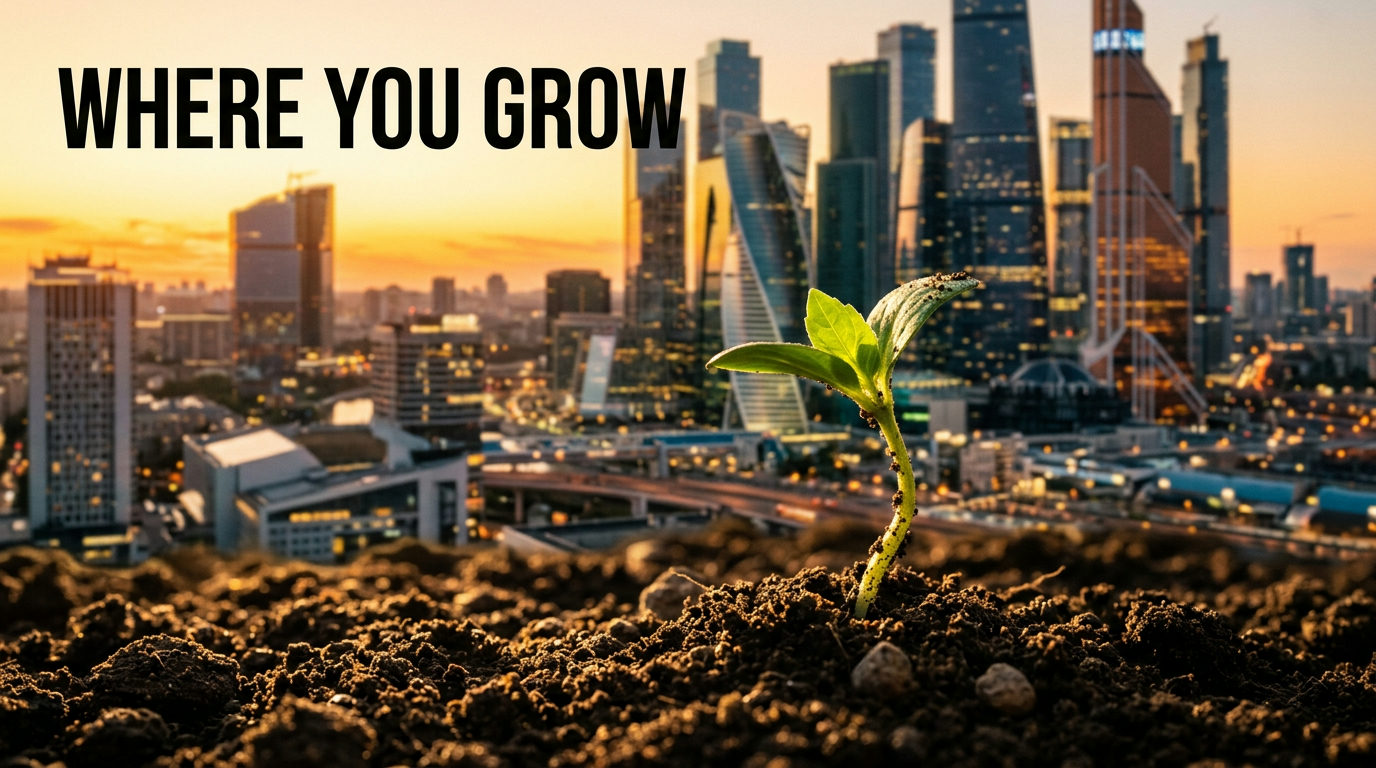
I’ve spent two decades building businesses, and if there is one thing I’ve learned, it’s that hard work is often secondary to where you choose to stand. You can be the smartest person in the room, but if the room is located in a basement with no windows and no exits, your growth is capped. I call this the Success Geography Theory. It’s the idea that your physical and cultural environment acts as either a tailwind or a brick wall for your ambitions. Talent is universal, but the soil that allows that talent to hit millions in revenue is very specific.
Understanding the Success Geography Theory
The Success Geography Theory isn't just about moving to a big city; it’s about positioning yourself where the friction between an idea and its execution is at its lowest. Think of it like farming. You can have the highest-quality seeds in the world, but if you plant them in the middle of a salt flat, nothing grows. You need the right nutrients, the right climate, and the right irrigation.
In business, those nutrients are access to capital, a dense talent pool, and a culture that doesn't just tolerate risk but rewards it. When I look at the most successful founders in history, their trajectories almost always involve a massive geographic pivot. They realized that their hometown, or even their home country, was a ceiling they were tired of hitting their heads against.
Elon Musk: Leaving South Africa for the Silicon Frontier
Elon Musk is perhaps the most modern example of this theory in action. Had he stayed in South Africa, he might have been a successful local businessman, but he wouldn't be building rockets. He understood early on that the United States—and specifically Silicon Valley—was the only place on earth where the density of engineering talent and venture capital matched the scale of his ambitions.
He didn’t just move for the weather. He moved for the "soil." He needed an environment where failing at a massive project was seen as a badge of honor rather than a permanent social stain. By moving, he changed his potential ceiling from "successful regional player" to "global disruptor."
Albert Einstein: From Isolation to the Global Stage
We often think of genius as something that happens in a vacuum, but even Albert Einstein needed the right geography. Early in his career, he was a patent clerk in Bern. While he did his most revolutionary thinking there, it wasn't until he moved into the academic circles of Berlin—and later the Institute for Advanced Study in Princeton—that his theories were tested, validated, and scaled across the global scientific community.
His "geography" shifted from the isolation of a government office to the epicenter of intellectual gravity. Without that shift, his papers might have remained interesting footnotes rather than the foundation of modern physics. He needed the feedback loop that only a specific location could provide.
My Journey: From Mexico to the Factories of Shenzhen
I lived this theory myself. Years ago, I left Mexico and headed to China. I didn't go there for a vacation; I went because I wanted to be at the heart of global manufacturing. I ended up in Shenzhen, a city that transformed from a fishing village into a hardware mecca in just a few decades. It was there that I experienced the true power of the Success Geography Theory while working with an ebike brand as the co-founder.
In Shenzhen, the distance between a sketch on a napkin and a physical prototype is measured in hours, not weeks. If I needed a specific chip, a custom mold, or a high-capacity battery, I didn't have to email a supplier across the world and wait for shipping. I could walk across the street or take a ten-minute bike ride. That proximity creates a speed of execution that is impossible to replicate anywhere else.
Being in that environment allowed me to scale my understanding of business logic far faster than I ever could have back home. I wasn't just reading about supply chains; I was standing inside them. That "soil" allowed my business ideas to grow at an exponential rate because the environment was designed for scale.
The Xiamen Transition: Seeking New Soil
Now, I’m navigating a new transition in Xiamen. Every time I move, I’m looking for a different kind of growth. The needs I had ten years ago in the middle of a manufacturing frenzy aren't the same needs I have today as I build out proprietary AI infrastructure and autonomous systems.
Geography isn't static. The "right" place for you today might be the "wrong" place for you five years from now. The key is to recognize when you have outgrown your environment. If you feel like you are the only one in your circle pushing for something bigger, or if the infrastructure around you makes simple tasks feel like climbing a mountain, you’ve likely hit your geographic ceiling.
Why Place Defines Your Ceiling
It’s easy to believe the lie that "you can work from anywhere" in the internet age. While remote work is a powerful tool, it doesn't replace the serendipity of being in a high-density hub. Success Geography Theory highlights three main factors that define your ceiling:
- The Peer Effect: When everyone around you is playing at a high level, your "normal" shifts. If your neighbors are building unicorns, a six-figure business feels small. If your neighbors are struggling to pay rent, a six-figure business feels like you've won the game.
- Resource Density: This is the ease of access to the specific tools you need—whether that’s specialized labor, specific hardware, or investors who understand your niche.
- Cultural Permissions: Some places punish outliers. Other places celebrate them. You cannot thrive in a culture that is fundamentally designed to keep you in your place.
If you want to hit millions in revenue, you have to be honest about whether your current location supports that goal. Are you in a place that feeds your ambition, or one that drains it? Sometimes the most productive thing you can do for your business isn't to work harder—it’s to pack your bags and find better soil.
I’ve built my life around moving toward the heat. Whether it was the manufacturing hubs of China or the digital frontier of AI, I’ve always sought out the places that offer the highest ceiling. If you feel stuck, take a hard look at your map. You might just be planted in the wrong spot.
If you're ready to stop hitting your head against the ceiling and want to see how I'm building systems that scale regardless of where you are, check out my latest builds at Nestor Sulu.
// INITIATE_PROTOCOL
Got a bottleneck an AI system could remove?
Tell me what you're trying to scale. I'll tell you what I'd build.
[WORK_WITH_ME]